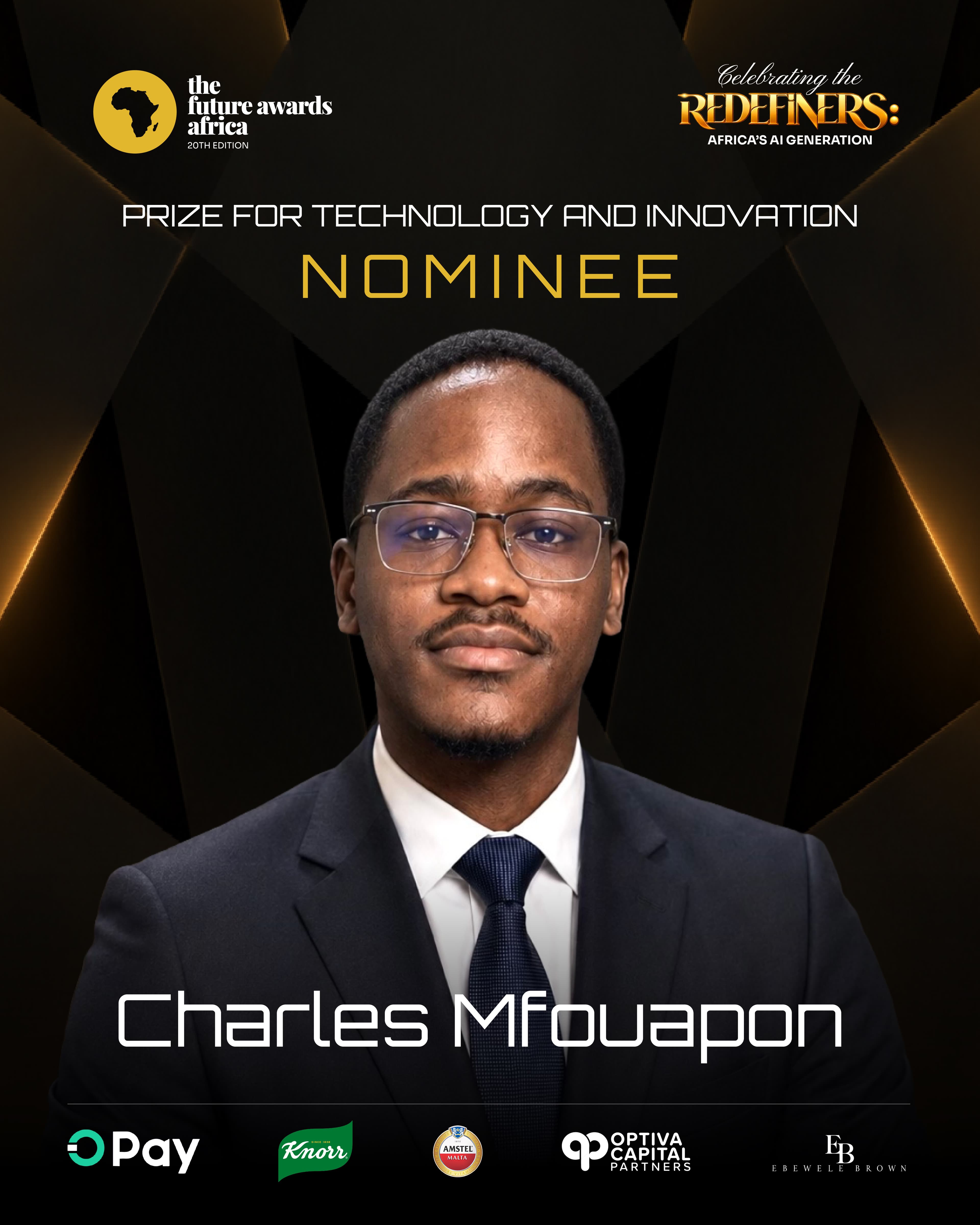
On October 19, 2026, The Future Awards Africa announced the nominees for its 20th edition. My name is on the list for the Prize for Technology and Innovation.
This anniversary edition is themed “Celebrating the Redefiners: Africa’s AI Generation.” It recognises young Africans aged 18 to 35 across 26 categories, from technology and entrepreneurship to the arts, public service, sport and community development.
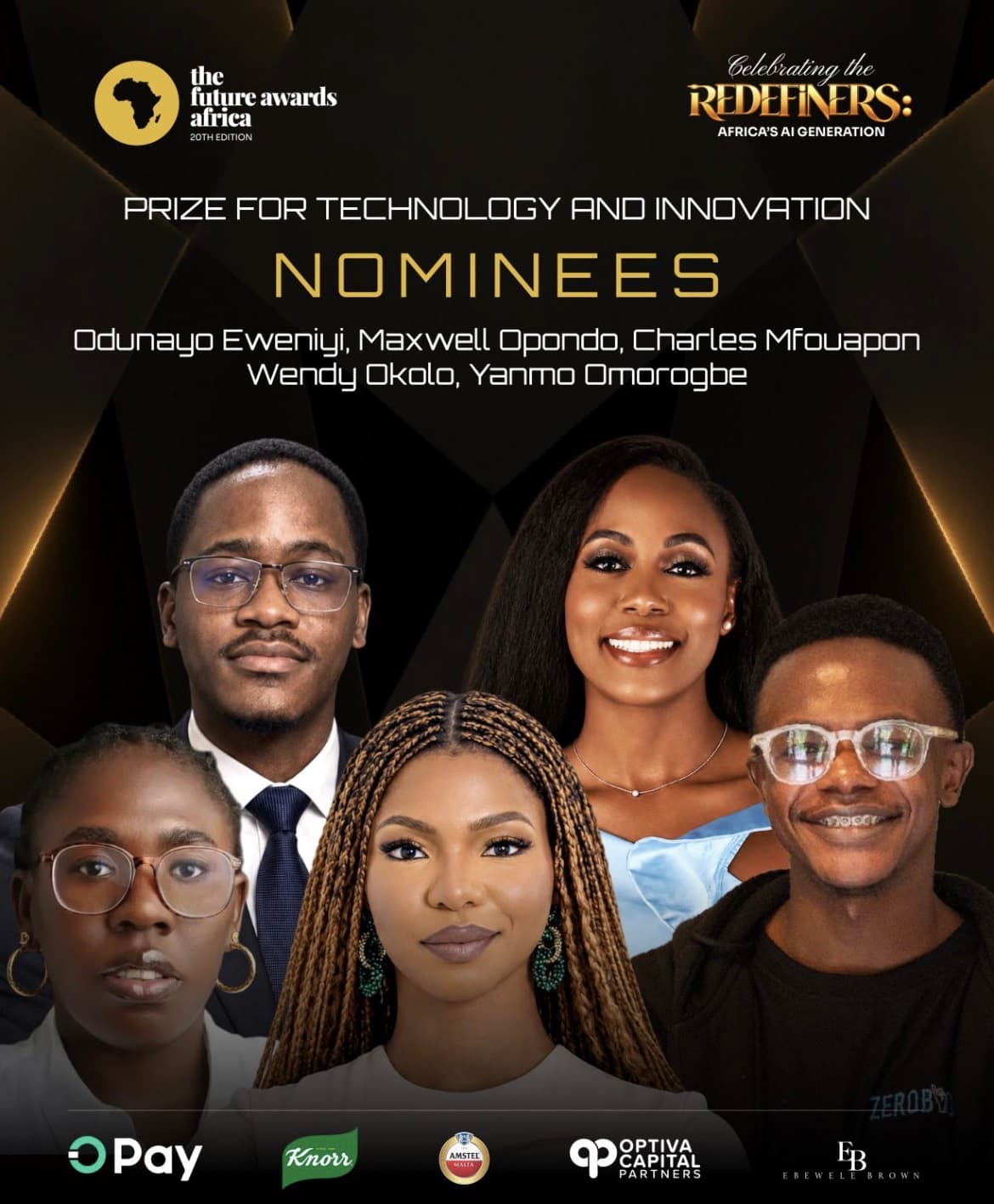
Five of us are nominated in my category.
- Odunayo Eweniyi
- Maxwell Opondo
- Charles Mfouapon
- Wendy Okolo
- Yanmo Omorogbe
The awards ceremony is scheduled for November 2026 in Lagos.
01A first in eleven years
The organizers have confirmed to me that I am the first Cameroonian nominee in the technology category in eleven years.1 The last was Arthur Zang, nominated in 2015 for the Cardiopad, his medical tablet for heart diagnostics in places far from a cardiologist.
I find that more sobering than flattering. Eleven years is a long gap for a country with as much technical talent as Cameroon. I do not read it as a gap in ability. I read it as a gap in visibility, in networks, and in the institutions that carry work from a laptop or a workshop to a stage like this one.
Being named among the nominees is an honour, but the work remains the point.
02The work behind it
My work in technology sits where finance, law and institutions meet. AfriScore turns mobile money, airtime and utility data into explainable credit scores for lenders in emerging markets. GEDA, a document management system I built and delivered to the CEMAC Representations in Cameroon and Gabon, replaced scattered paper and folders with a searchable, auditable record. Alongside both, I publish preprints and policy briefs on credit, regulation and capital markets.
What links them is a simple conviction: systems that matter to people have to be explainable. A credit score that cannot say why it scored someone as it did is not inclusion. A document system that cannot show who opened a file is not an institution’s memory.
03Africa’s AI generation
The theme of this edition asks what it means to be part of Africa’s AI generation. My answer is cautious. Building models is the easier half. The harder half is making sure the institutions that use them, whether a lender, a regulator or a government office, can understand, challenge and govern what the models do.
That is why I care about explainability, audit trails and local regulation as much as I care about accuracy. A model that is trusted only because nobody can question it has not earned that trust.
04Thanks, and what comes next
I am grateful to everyone who nominated and supported me, and to the organizers for a platform that has recognised young African work for twenty years.
A nomination recognises work in progress. Whatever happens in Lagos, the work continues: more institutions, more lenders, and more systems built to outlast the person who made them.
But a nomination is a marker, not a result.